Sunday, 16 June 2024

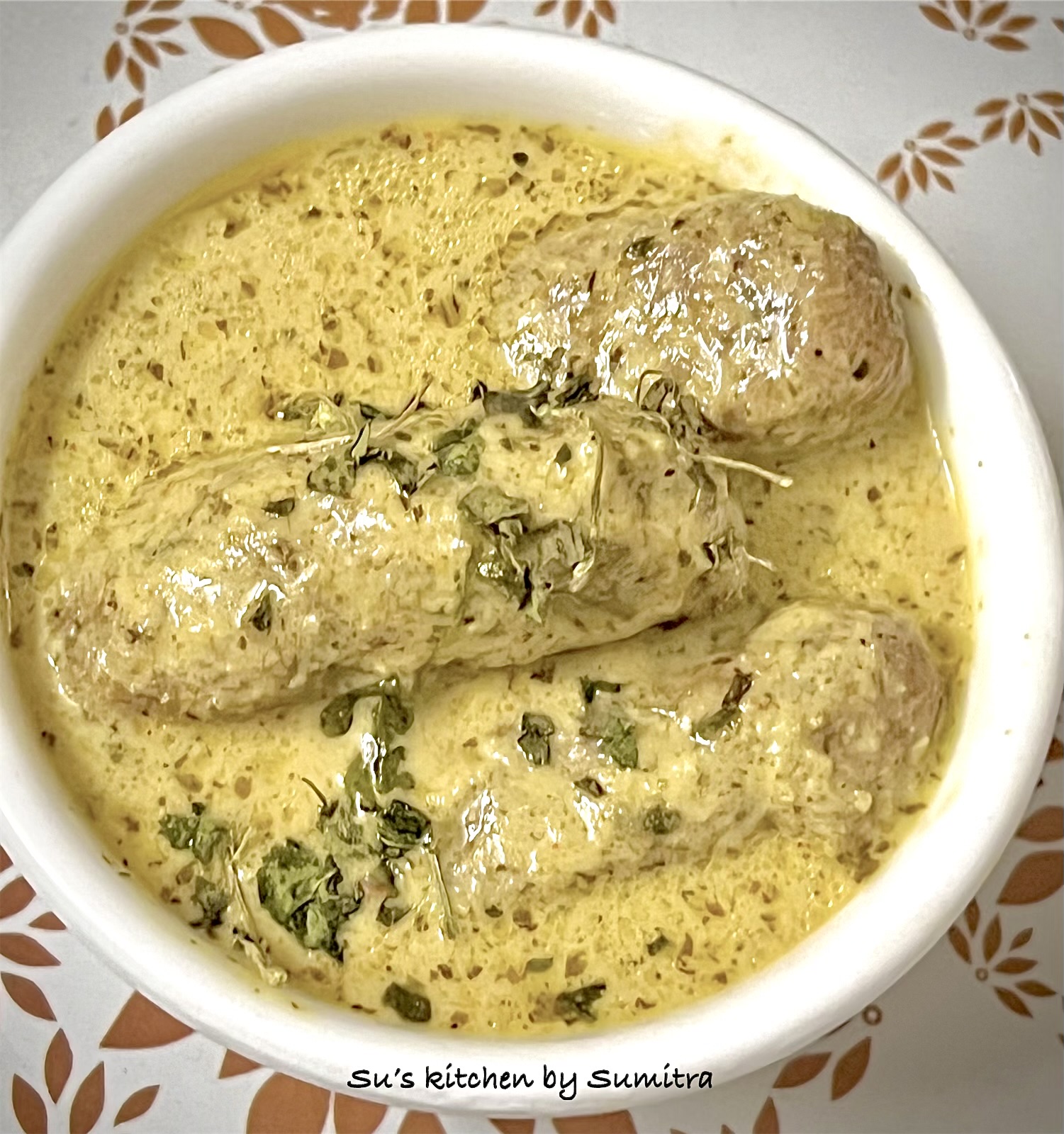
Varhadi Chicken Curry


Varhadi Chicken Curry 

Varhadi cuisine and Saoji cuisine comes from the eastern region of Maharashtra (Vidarbha region). Varhadi and Saoji are the 2 cuisines that are spicy and not suitable for faint hearted person, but still Varhadi cuisine has a milder version of spice level. 

Today we prepared Varhadi Chicken Curry right from scratch… A lovely recipe shared by my friend. The Varhadi Masala once made can be stored and can be used in making other Varhadi dishes… 

We added less Chillies because of my daughter, but more chillies can be added as per the taste. We served the Chicken with Bhakri, Rice, Chinchecha saar and Onion. 


Varhadi Masala Powder 

Ingredients 

2 tsp Cumin seeds 

1/2 tsp Sahi Jeera

6 tbsp Coriander seeds

1 tsp Mustard seeds

20 Pepper Corn 

1/4 tsp Methi seeds 

1 tsp Kasuri Methi 

2 tbsp Dried Grated Coconut (Khopra)

6 Cloves 

2 Black Cardamom

6 Green Cardamom

1 small piece Nutmeg 

1 Javtri 

1 tsp Dagad phool

1 medium stick Cinnamon 

4 to 5 Kashmiri chillies 

6 Spicy dried Red Chillies 

Method 

Fry roast all the above ingredients until light brown in colour and an aroma releases, switch off the flame and cool the masala down. Grind the masala into a powder. This powder can be stored for any gravy dish.


Wet masala 

Ingredients 

1 big size Onion sliced 

15 Garlic cloves 

2 to 3 small pieces of Ginger 

Few stems and leaves of Coriander leaves chopped 

1 tbsp Oil 

Method 

Take a pan, add oil and heat the oil, reduce the flame and add onion slices, stir fry the onion slices until light brown in colour, add the garlic and ginger. Fry for a minute, add coriander leaves and stems, stir and cook until the onions are brown in colour, switch off the flame and cool down. Grind with 1/4 cup water until the ingredients becomes into a paste. 


Varhadi Chicken Curry 

Ingredients 

750 grams of Chicken cut into pieces 

1 small Onion chopped 

Salt to taste 

1 tsp Turmeric powder 

1/2 tsp Chilli powder 

2 tbsp Varhadi Garam Masala 

Wet paste 

4 tbsp Oil 

1 cup Water 

Method 

Take a pressure cooker, add the chicken pieces, little salt to taste, 1/2 tsp Turmeric powder and water, give 2 whistles, switch off the flame, let the pressure release, separate the chicken pieces from the stock. Take a pot, add oil, let the oil heat. Add the chopped onion, stir fry until light brown in colour, add the chicken, stir, gradually add the remaining turmeric powder, chilli powder and salt to taste. Stir and cook for 2 minutes. Add the Varhadi masala, stir, add the wet paste, continue cook for 3 to 4 minutes. Now add the chicken stock, stir and let the curry simmer for 5 minutes. Switch off the flame, cover and keep, before serving add coriander leaves, serve with bhakri,  rice and onions.


Thursday, 30 May 2024

Chingri ar Kacha Aam diye purbhora Lunka r Achar


Chingri ar Kacha Aam diye purbhora Lunka r Achar - 

This pickle recipe was going on in my head for sometime ..  I wanted to experiment and create the recipe… finally made it, it’s an amazing Bengali pickle for nonveg lovers. I have used prawns, but mutton Keema also can be used after boiling the Keema. 

Here I have taken fat green chillies, stuffed the chillies with raw mango and prawns with spices. This pickle with stay for 3 to 4 months in the fridge. Can be enjoyed with dal - rice, Paratha or chapatis. 

Any pickle masala can be used, I have also shared the masala that I have made. 


Here is the recipe… 


For the Pickle Masala 

Ingredients 

1 tbsp Mustard 

1 tsp Coriander seeds

1/4 tsp Fenugreek seeds

1/2 tsp Carom seeds

1/2 tsp Cumin seeds 

1/2 tsp Fennel seeds

1 tsp Chilli powder 


Method 

Grind all the above ingredients together into fine powder 


For the stuffing 

Ingredients 

2 tbsp Kasundi 

2 tbsp Pickle Masala 

1/2 Turmeric powder 

1/2 tsp Black Salt 

Salt to taste 

10 to 15 boiled Prawns ground without any water

3 tbsp Ginger- Garlic - Green Chilli paste ( 1 small Ginger, 10 to 15 Garlic, 10 Green Chillies) 

4 tbsp grated Raw Mango - excess water squeezed out 


Method 

Mix all the above ingredients together. 


For the Pickle 

15 Fat Green Chillies washed, dried, stem removed and slit on one side for stuffing 

Stuffed Masala 

1/2 cup Mustard Oil 

1 tbsp Vinegar 


Method 

Take a green chilli, stuff the masala in the green chilli, repeat the process until all the chillies are stuffed. 

Take oil in a spread out pan, heat the oil until smoking point, switch off the flame and cool the oil down. Switch on the flame once again, the flame has to be low. Place the stuffed green chillies in the pan. Turn the green chillies and coat the oil all over the chillies. Add the excess stuffing masala into the oil, the oil will be just warm, switch off the flame, let the oil cool down. Add a tbsp of vinegar. Take a clean dry jar, place the green chillies into the jar, pour the excess oil and the masala into the jar. Keep the jar out for 2 days. Then keep the jar in the fridge. It stays well for 3 to 4 months. Enjoy with dal - rice, Paratha or chapatis.

Sunday, 26 May 2024

Malai Methi Chicken Kabab Curry


 Malai Methi Chicken Kabab Curry - It’s a delicious side dish to go with Pulao, Roti, Naan or Paratha. It’s quick to make… Vegetarians can use Paneer or Vegetarian Kababs instead of the Chicken Kababs. 

Here I have grilled the Kababs in an Air fryer. The Kababs can be grilled in an oven or on charcoal. 

Here is the recipe how I made it - 

For the Chicken Kabab - 

Ingredients 

400 grams of Chicken Keema or Boneless cut into small piece 

1 small Onion chopped 

4to 5 garlic 

1 small piece of Ginger 

3 to 4 Green Chillies 

1 tbsp Lime Juice 

Few Coriander stems and Leaves chopped 

Few Mint Leaves 

Salt to taste 

1 tsp Roasted Cumin and Coriander powder 

2 tbsp Sattu or roasted Besan

1 tsp Chicken Masala 

1/2 tsp Turmeric powder 

1/2 tsp Garam Masala powder 

1 tsp Oil + 2 tbsp Oil 

1 tsp Ghee

1 piece of Charcoal 

Method 

Add all the above ingredients plus one tsp oil except charcoal and ghee into to a chopper and blend all the ingredients together until it begins to form a soft dough. If chopper is not available then use a mixer jar. 

Remove the Kabab mix and knead it well. Take a piece of charcoal and heat it up on fire. Place the charcoal in a small bowl, place the bowl in between the kabab mix. Pour a tsp of ghee and cover the big bowl of kabab mix for 10 minutes. After 10 minutes remove the charcoal bowl. ( The charcoal process can be avoided if the Kababs are grilled on charcoal grill). 

Now apply oil on your palms. Take a big lemon size portion of the kabab mix. Shape as you like, cylindrical or oval. Brush the remaining oil on the Kababs. 

Place them on a tray. Air fry at 180 degrees Celsius for 10 minutes on each sides. Similarly can use a preheated otg or grill it on a grilling pan until brown on both the sides. Keep it aside. 


For the Wet Paste for the Curry 

Ingredients 

1 big size Onion sliced 

5 to 6 Garlic chopped 

1 small Ginger piece chopped 

2 to 3 Green Chillies chopped depending upon your spice level 

Few Coriander stems chopped 

10 Cashew nuts

Salt to taste 

1/2 tsp Sugar 

1 tsp Cumin powder 

1/2 tsp Coriander powder 

1/4 tsp Turmeric powder - (Optional)

1 Green Cardamom 

2 Cloves 

1 small piece Cinnamon 

1 tsp Oil 

4 to 5 tbsp Curd 


Method 

Add all the above ingredients in a pan except curd. Sprinkle little water and mix all the ingredients together. Place the pan on a low flame. Cover and cook, stirring occasionally until the onion pieces have become translucent. Switch of the flame. Once the ingredients have cooled down, grind all the ingredients together with the curd into smooth paste. 


For the Methi Malai Chicken Kabab Curry 

Ingredients 

Chicken Kabab 

Wet paste 

2 to 3 tbsp Ghee 

2 Green Cardamom 

2 Cloves 

1 small piece of Cinnamon 

1 Bay leaf 

1 tbsp Kasuri Methi 

Salt if required 

1/2 cup Milk 

1/4 cup Cream 


Method 

Take a wok, add ghee, add cloves, cinnamon, cardamom and bay leaf. Sauté for few seconds. Add the wet paste and 1/2 of the crushed kasuri methi, stir, cook for 2 minutes on low flame. Once the masala starts to thicken and the ghee releases, add 1/2 cup water, cover and let it simmer for a minute. Meanwhile beat the milk and cream together and keep it aside. Add the kababs and let the gravy simmer for another minute. Pour the milk - cream into the gravy and stir gently, in few seconds switch off the flame. Garnish with remaining crushed Kasuri Methi and serve with Paratha or Naan.

Wednesday, 22 May 2024

Mango pickle with Fenugreek sprouts


Mango pickle made with Fenugreek sprouts - just loving it… made in complete traditional way.. 

Here is the recipe - 

1 1/2 kg Raw Mangoes - (Measurement after washing, cleaning and cutting the mangoes into pieces)

1/2 cup Fenugreek seeds 

1/2 cup Mustard Dal ( Rai ka Kuria) 

4 tbsp or more Salt as per taste

2 tbsp Turmeric powder 

1 tbsp Kashmiri chilli powder 

3 tbsp Chilli powder 

2 tbsp Roasted Fennel powder 

1 tbsp Roasted Coriander powder 

1 tbsp Roasted Cumin powder 

1/2 tsp Asafoetida 

1 tsp Carom seeds

1/2 tsp Nigella seeds

1/2 liter Sesame Oil


Method 

Day 1 - Take a bowl, add the mango pieces, add 2 tbsp salt and 1 tbsp turmeric powder, mix all the ingredients together, cover and leave the bowl aside overnight, wash the fenugreek seeds well and soak the fenugreek seeds in water overnight. 

Day 2 - Next day stir the mango pieces with a dry spoon. Cover and keep the mangoes aside. Strain the water from the fenugreek seeds, instead of throwing the water, drink the water, it’s good for health. Take the soaked fenugreek seeds and in a moist cloth, tie the cloth and keep it hanging. In between keep sprinkling water on the cloth to keep the cloth moist. It takes 2 days to get sprouts. We don’t need to over sprout the seeds. 

Day 3 - Strain the water from the mango pieces and keep the water aside. Spread the mango pieces on a cloth or on a plate, sun dry the mangoes for 3 to 4 hours. 

Meanwhile heat the oil, let the oil cool a bit, but it should be still hot, add the these ingredients in a bowl - 2 tbsp salt, mustard dal, Kashmiri chilli powder, red chilli powder, remaining turmeric powder, roasted coriander powder, cumin powder, fennel powder, carom seeds, Nigella seeds and asafoetida. Mix all the ingredients together. 

Now add 1/2 the amount of oil into the ingredients and mix well. Cover and keep the masala aside, until the mangoes are sun drying. After 3 to 4 hours, add the mangoes into the masala, mix the masala well and keep the mangoes covered. 

Day 4 - Remove the fenugreek sprouts and sun dry until all the moisture from the sprouts are removed, for 2 hours. Then add the fenugreek sprouts into the marinated mango water, mix and keep it aside for an hour. Now mix the water and the sprouts into the mango pieces. Stir and keep it aside. 

Day 5 - Store the pickle into a clean dry glass jar. 

Day 6 - Stir the pickle and add the remaining oil. Stir daily once with a clean dry spoon and keep it to mature for at least 7 days. 

After 7 days it’s ready…

Friday, 17 May 2024

Kasundi - Traditional method…


 Kasundi is quintessentially a part of the Bengali cuisine. It’s used in cooking and used as an accompaniment with fried food as dip, salad and starters. Kasundi has a sharp pungent taste.

 Traditionally Kasundi is made with lots of rituals and many restrictions are followed. Earlier only the Bramhins could only make the Kasundi. Made in the month of April ( End April and starting of May,  as the mustard seeds have been harvested and dried in the Sun. Kasundi should be made before the monsoon begins. The mustard seeds and other spices are washed, dried in the Sun and ground into fine powder. Black mustard is used. The water is boiled and reduced into 3/4 quantity. The mustard powder is added into the mud pot along with salt and Turmeric powder. Gradually warm water added and stired well. The Kasundi is made into thin consistency. The Kasundi is stirred very well. Some people add raw mango pieces into the Kasundi. 

In villages people enjoy Kasundi with puffed rice / muri makha, different types of vegetables makha or add the Kasundi in the green vegetables like paat saag / jute leaves. 

Now it is made at home with ease. Apart from traditional Kasundi there are now many ways and ingredients vary while  making the Kasundi. 

Here is a humble try of making the traditional Kasundi at home. It stay for a long time out, but I prefer keeping the Kasundi in the fridge. 

Here I have used Black and Yellow mustard. I have added few Garlic cloves, it’s optional. I have added vinegar so that it stays well for a longer period of time.


Ground Spices for Kasundi 

Ingredients 

1 tbsp Cumin seeds 

2 tbsp Coriander seeds 

6 to 8 Pepper corns 

4 Bay leaves 

6 to 7 Dried Chillies 

4 Cloves

3 Green Cardamom 

1 small piece of Cinnamon 


Method 

Dry roast all the above ingredients until an aroma releases. Switch off the flame and keep the spices aside until it cools down. 


Kasundi 

Ingredients 

1 medium size Raw Mango washed, peeled and ground into paste. 

4 Green Chillies (optional)

1 medium piece of Ginger

4 Garlic cloves (optional)

1/2 cup Yellow Mustard seeds 

1 cup Black Mustard seeds

Salt to taste 

2 tsp Turmeric powder 

Ground spices 

1 1/2 liter or more Boiled warm water ( Water has to boil and reduced to 3/4) 

2 tbsp Vinegar (optional)

Method 

Wash the black and yellow mustard seeds. Dry the mustard seeds in the sun until it’s completely dried up. 

Take a grinding jar, add the mustard seeds, Grind the mustard seeds into fine powder. Also make a paste of the green chillies, ginger and garlic together. Add the ground spice powder into the mustard powder. Sieve the ingredients together, so that we get a very fine powder of the ingredients ground. Take a mud pot, add the mustard and spice powder into the pot. Add salt and turmeric powder. Mix all the ingredients together. Add the ginger - chilli - garlic paste and mango paste. Now add the warm water gradually into the pot and keep on stirring, so that no lumps should form. Keep stirring, check on salt. Add salt if required. Keep stirring and keep adding warm water until the sauce has a thin consistency. Keep stirring for 10 to 15 minutes as all the ingredients blends together and all the flavours releases. Add the vinegar. Gradually the Kasundi will become a bit thicker later. Cover and leave the Kasundi aside in the mud pot. Next day transfer the Kasundi into the dry clean bottles and keep it in a dry place. Later keep it in the fridge.

Tuesday, 30 April 2024

Macher Patishapta


 Macher patishapta - 

Patishapta is a sweet pitha usually made during Makar Sankranti in Bengal. 

The patishapta base / crepe is made with rice flour, semolina and all purpose flour. Here taking inspiration from patishapta, I have made Maacher/ fish patishapta. Instead of sweet stuffing, savoury fish stuffing is added into the patishapta base. This dish can be enjoyed for breakfast or snack. 

Fish stuffing 

Ingredients 

250 grams boiled boneless fish mashed 

1 medium size onion sliced 

2 Green Chillies chopped 

1 tsp grated Ginger 

1 tsp grated Garlic 

Few Coriander leaves chopped 

1 Bay leaf

1/4 tsp Cumin seeds 

1/4 tsp Turmeric powder 

1/2 tsp Cumin powder 

1/4 tsp Garam masala powder 

1/4 Chilli powder 

Salt to taste 

1/4 tsp Chaat masala 

1 tsp Tomato Ketchup 

1 tbsp Oil

Method 

Take a pan, add oil, once the oil heats up, add the bay leaf and cumin seeds. Once the cumin seeds crackle, add the onion slices, ginger, garlic and green chillies chopped. Saute until the onions are light brown in colour. Add the boiled fish, salt, cumin powder, garam masala powder, chilli powder and turmeric powder. Stir and cook the fish for a minute, add the chaat masala and tomato ketchup. Stir and cook until the fish stuffing has cooked well. Sprinkle coriander leaves. 

For the crepe 

Ingredients 

3/4 cup whole wheat flour 

1/2 cup fine semolina 

1 Egg

Salt to taste 

1/4 tsp Baking powder 

1 tsp oil

Fish stock ( Remaining liquid after the boneless fish has been boiled) and water as per required 

Method 

Take flour, semolina, baking powder and salt. Mix all the above ingredients together. Add the egg and the fish stock,  add water little at a time if required to make a batter. The batter should be of thick flowing consistency. Beat well so that no lumps should remain. Cover and let it rest for 10 minutes. 


To make Macher Patishapta 

Ingredients 

Fish stuffing 

Batter 

Method 

Take a pan, keep the flame on medium. Once the pan warms up, pour a ladle full of batter, rotate the batter and make a thin crepe, let the crepe cook, once done, remove the crepe on a plate, spread some fish stuffing on the crepe, roll the crepe and enjoy it with salad, Kasundi and tomato ketchup.

Sunday, 21 April 2024

Mangalorean Buns with Veg Sagu


 May times we have visited Mangalore and every time we enjoyed this meal during breakfast. My friend’s MIL makes one of the best Mangalorean Buns. This dish is very popular in Mangalore and is available in most of the restaurants for breakfast. 

Here is the recipe - 

Mangalore Buns

 Ingredients

2 cups Whole Wheat flour  Flour

2 medium sized Ripe banana

2 tbsp Jaggery powder or Sugar 

½ tsp Cumin powder

1/4 tsp Baking soda

Salt to taste

2 tbsp Curd

1 tsp ghee

oil for deep frying


Method

Take a mixing bowl, mash the bananas, now add sugar, salt,  baking soda, cumin powder and curd . Mix the ingredients well into a smooth paste. Add the flour and knead the flour into a dough, add little more flour if required. The dough is slightly sticky. While kneading you can apply some ghee and knead. Keep the dough covered in a bowl overnight. Knead the dough the next morning. The dough is a bit sticky, so dust some flour and take medium sized balls from the dough and roll into round pooris. Fry each poori into medium hot oil till they are puffed and golden. Serve the buns as snacks or enjoy for breakfast with veg sagu or with coconut chutney or Sambar. 


Veg Sagu Recipe - 

Wet Paste 

Ingredients 

1 small Onion chopped 

1 small Tomato chopped 

2 Green Chillies 

Few Coriander stems cut into pieces 

1 small piece of Ginger 

2 tbsp grated Coconut or desiccated Coconut 

4 to 5 Cashew nuts

Salt to taste 

1 tsp Jagger 

1/2 tsp Turmeric powder 

1/2 tsp Cumin powder 

1/2 tsp Kashmiri chilli powder 

1/4 tsp Chilli powder 


Method 


Grind all the above ingredients into a fine paste with water. 


Veg Sagu 

Ingredients 

1 medium bowl around 250 grams of vegetables cut into small pieces - Carrot, French Beans, Cauliflower, Capsicum, Green Peas and Potato

2 Green Chillies 

Few Curry leaves 

Few Coriander leaves chopped 

1/2 tsp Chana dal

1/2 tsp Urid dal 

1/2 tsp Mustard seeds 

1 Dried Red Chilli cut into pieces 

Few Cashew nuts  

Wet Paste 

2 tbsp Oil 


Take a pressure cooker, add oil, once the oil heats up, add the dried chilli, chana dal and Urid dal. Once the dals are half fried, add mustard seeds and curry leaves. Saute until the mustard seeds crackle. Add the vegetables, cashews and green chillies. Sauté for 2 minutes. Add the wet paste and continue to cook until the oil releases from the paste. Add 3/4 cup of water. Stir, cover the pressure cooker and give 2 to 3 whistles. Once the air pressure releases, check the gravy, as per choice, we can reduce the gravy. Garnish with coriander leaves. Serve with poori, buns, Paratha etc. 

Sunday, 3 March 2024

Kolkata style Chicken Cutlet ( Fowl Cutlet)


Fowl Cutlet is one of the street food of Kolkata and also one of the popular dish that’s sold in the Cabin style restaurants.. where each wall of the old cabin restaurant has some story to tell.. This dish is also made during occasions… 

The chicken cutlets are made with chicken mince or boneless chopped chicken pieces, spices and coated with egg and bread crumbs. It’s fried in oil until golden brown in colour and served with salad and mustard sauce (Kasundi). 


Ingredients 

1 cup Chicken Mince

or Boneless Chicken pieces 

Half Onion taken from 1 small Onion 

1 small piece of Ginger 

4 Garlic cloves 

1 Green Chilli 

1/4 cup Coriander and Mint leaves 

Juice of 1/2 Lime

Salt to taste 

1/4 Pepper powder 

1/2 Garam Masala (Ground 1 Green Cardamom- small Cinnamon-2 Cloves)

1/2 tsp Bhaja Masaala (Roasted Cumin- Coriander- Red Dried Chilli ground into powder) 

2 Eggs

3/4 cup Bread Crumbs 

Oil to Fry 


Method 

Take a chopper or a grinder, add the chicken mince or pieces, lime juice, onion, green chilli, ginger, coriander and mint leaves, garlic, salt and pepper powder. Blend the above ingredients together. Take the paste out into a bowl. Add the garam masala and Bhaja masala into the paste. Mix the ingredients together. Take 1/2 of the bread crumbs in a plate, beat 2 eggs with little salt. Take a lemon size portion from the chicken paste. Roll the portion on a greased plate to give a cylindrical shape. Then with the help of the bread crumbs flatten the cutlets into diamond shape or oval shape. Repeat the same process. We get around 7 cutlets. Now with place one cutlet on the chopping board and with the help of a knife shape the edges well. Repeat the same process with all the remaining cutlets. Now dip one cutlet into the beaten egg and then coat the cutlet with the remaining bread crumbs. Repeat the same process with the remaining cutlets. Take a pan, heat the oil, until medium hot. Place 2 to 3 cutlets into the pan as per the space of the pan. Fry the cutlets until golden brown in colour from both the sides. Serve the chicken cutlets with salad and Kasundi. 


Wednesday, 21 February 2024

Coorgi Style Chicken Masala


 My recent visit to Coorg or the Kodagu district was an experience of its kind, as we stayed with the locals at a home stay amidst the coffee and pepper plantations… we enjoyed the uniqueness of the lush green wild nature and the distinctive cuisine to the fullest. Kodava or the Coorgi cuisine enjoys using fresh and local ingredients found in the region… like Kachampuli, the local vinegar extracted from the Garcinia Cambogia fruit, pepper - spices, bamboo shoots, pork - wild boar etc. 

The home stay owners were kind enough and allowed me to pluck some fresh pepper from their plantation… I also managed to get Coorgi Masala (kartha Masala) and Kachampuli… 

Using all the Coorgi ingredients, I have made Coorgi style Chicken Masala, here is the recipe -  

I have used big leg pieces, but we can also use medium size chicken pieces.. 


To marinate the Chicken 

Ingredients 

2 Big leg pieces 

Salt to taste 

1/2 tsp Turmeric powder 

1/2 tsp Chilli powder 

1 tbsp Coorgi Curry Masala (Kartha Masala) 

1 tsp Kachampuli Vinegar 

Method 

Mix all the above ingredients together and keep the marinated chicken for 2 to 3 hours. 


For the Wet Paste 

Ingredients 

2 small Onion chopped 

6 to 8 Garlic cloves 

1 small piece of Ginger

3 to 4 Green Chillies 

1 Handful Coriander leaves 

1/2 tsp Cumin seeds 

Method 

Grind all the above ingredients into coarse paste 


To make the Coorgi Chicken Masala 

Ingredients 

Marinated Chicken 

Wet paste 

Few Curry leaves 

Few Coriander leaves chopped 

2 Green Chillies slit and cut into pieces 

Few drizzle of Kachampuli vinegar 

Pickled Fresh Pepper 

Salt if required 

6 tbsp Oil

Method 

Add oil into the wok, once the oil is hot, add the wet paste. Stir and sauté until the paste is translucent. Add the marinated chicken, cover and cook for 2 minutes on each side, turning the chicken leg pieces occasionally. Continue to cook on low flame. Once the oil releases, add 1/2 cup of water, cover the wok and continue to cook, turning the chicken leg pieces occasionally until the chicken legs are tender and the gravy has reduced. Garnish with fresh pickled pepper, coriander leaves, curry leaves, green chillies and drizzle of Kachampuli vinegar. Serve with hot rice or akki roti.

Friday, 12 January 2024

Duck kosha / Hasher Mangsho kosha


Winters are the best time to make duck meat.. though the meat is not commonly eaten now a days as the meat is expensive. Earlier days I remember we use to get duck eggs or swan eggs when we travelled to Kolkata, but nowadays it’s not available. It’s a delicacy preparing duck meat. The duck meat is paired with chitoi / sara pitha or chaul er ruti/ rice chapatis.


Ingredients 
To marinate the Duck 
500 grams Duck 
Salt to taste 
1/2 tsp Turmeric powder 

Method 
Apply salt and turmeric powder on the meat. Keep the meat aside for 1 or more hours to marinate. 

Ingredients 
For Spice paste 
Salt
1/2 tsp Turmeric powder 
1/2 tsp Chilli powder 
1/2 tsp Kashmiri chilli powder 
1 tsp Cumin powder 
1/2 tsp roasted Cumin and Coriander powder 
1 tsp Meat masala powder 
2 to 4 tbsp Water 

Method 
Mix all the above ingredients together and make a paste. Keep the paste aside. 

Wet paste 
Ingredients 
1 small Onion 
1 medium size Tomato 
1 Green Chilli
1 small piece of Ginger 
5 to 6 Garlic Cloves 
2 Coriander stems 

Method 
Grind all the above ingredients together into a fine paste. 

To make Duck kosha
Ingredients 
Marinated Duck 
3 medium size Potatoes with skin cut into big cubes 
1 medium size Onion sliced 
2 Green Chillies slit
Wet paste 
Spice powder paste 
1/2 tsp Cumin seeds 
2 Green Cardamom crushed 
3 Cloves crushed 
1 small piece of Cinnamon crushed 
1 Red dry Chilli cut into pieces 
2 Bay leaves 
6 tbsp Mustard oil 

Method 
Take a pressure cooker, add the marinated duck meat, add a big cup of water. Pressure cook the meat for 2 whistles. Let the press release. Remove the boiled meat and the stock into a bowl. In the same pan, add the oil. Let the oil heat up. Add the potato cubes, fry them until light brown in colour. Remove and keep the potatoes aside. In the same oil add the cumin seeds, crushed cardamom, cloves, cinnamon, red dry chilli and bay leaves. Let it crackle, add the boiled meat, sauté for 2 minutes, add the sliced onions, sauté until golden brown in colour. Add the spice paste and wet paste. Cook the meat until the oil releases. Add the potatoes and continue to cook. Add little stock at a time and continue to cook until the potatoes are tender. Add the green chillies and add the last remaining stock. Cook for 2 minutes and switch off the flame. Serve the duck kosha with Chitoi pitha or rice chapatis. 

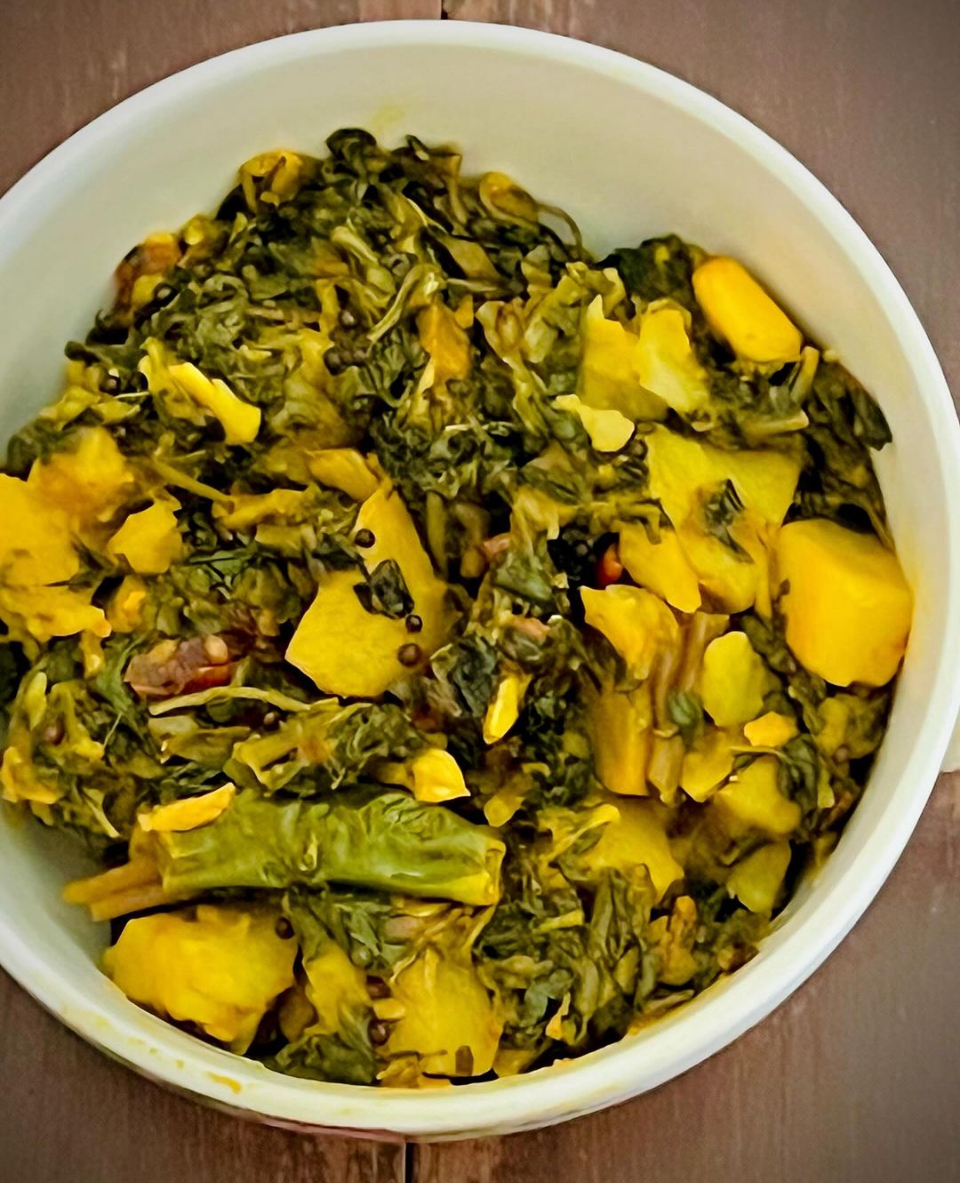
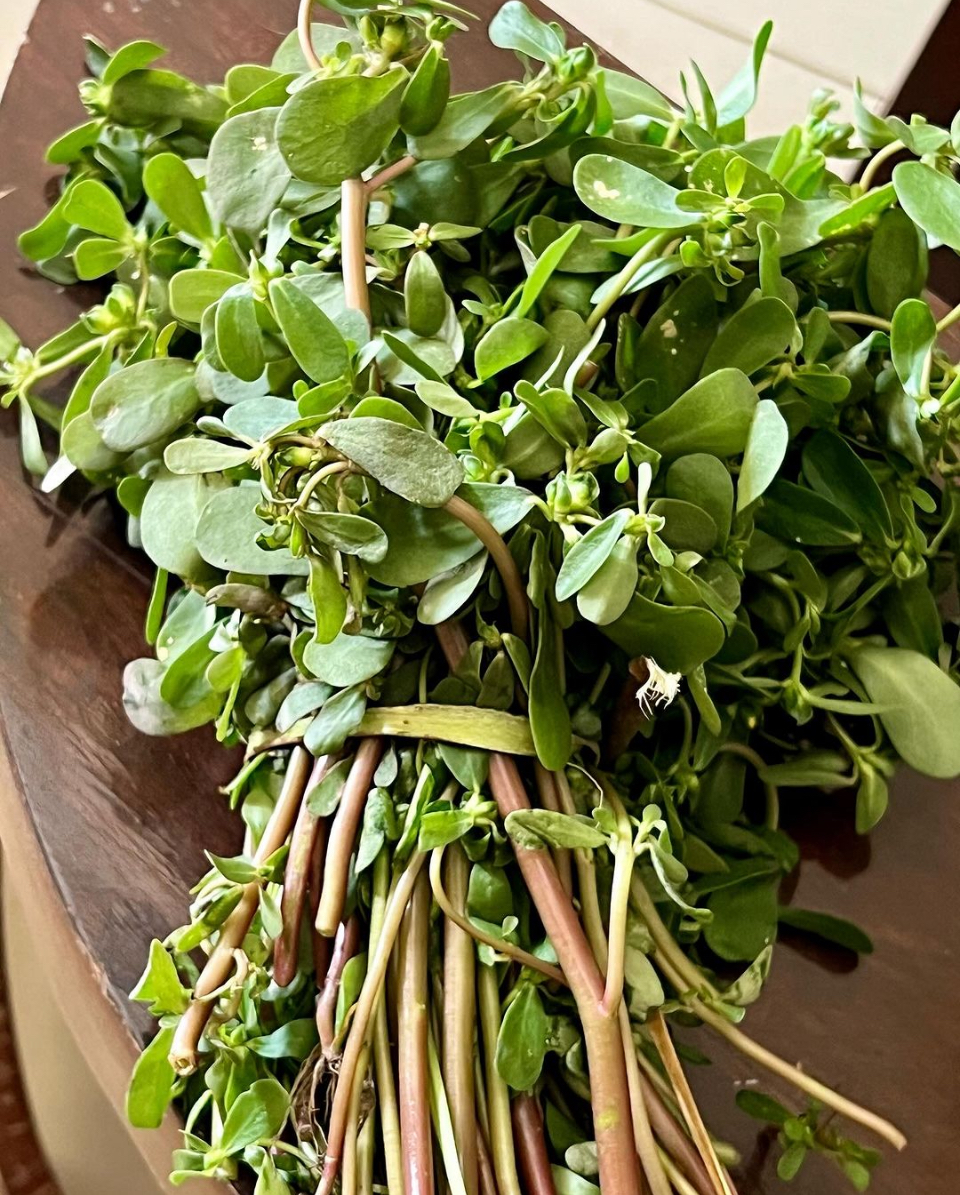
Kulfa / Purslane Bhaji


 Kulfa/ Luni Bhaji/ Nunia Saag / Purslane grows wild in India and it’s generally mistaken as weed…unlike spinach, fenugreek, mustard greens etc, this vegetable isn’t cultivated, few days back I saw this plant growing in my kitchen pots.. wild.. I was about to pluck, my house helper said let it grow… we can use in cooking.. this plant has immense health benefits. Staying in urban, most of us don’t know many of the greens that grows around wild… it’s off later that I have been noticing that sometimes some of the villagers come to the city from the nearby villages to sell these treasures. 


This is an annual plant, the leaves and stems are succulent and the flowers can be of any colour like pink, white or yellow. The common one is yellow… The stem and the leaves are both edible, used in soups, salad or cooking. In India it’s cooked with dal, or with as sabji / bhaji. The taste of the leaves are bit tangy. Purslane has vitamins, minerals, and antioxidants that can be extremely beneficial to our health. 


We can stir fry the greens with garlic and green chillies, or cook them with dal or make a gravy dish… one of the recipe that I make with this leafy vegetable is -

Ingredients 

1 bunch of Kulfa leaves chopped 

1 Potato cut into cubes 

1 small Tomato chopped 

1 tbsp chopped Garlic 

2 Green Chillies cut into half 

1 Dried Red Chilli 

Salt to taste 

1/2 tsp Turmeric powder 

2 tbsp Oil 


Method 

Take a wok, add oil, once the oil heats up, reduce the flame, add the garlic and red dried chilli. Sauté the garlic, once the garlic turns light brown in colour, add the tomato, potato, salt and turmeric, stir and cook until the potato is half cooked. Add the chopped greens and green chillies. Stir and cover the wok. Let it cook until the water has evaporated and the vegetable and the potato has cooked completely. Serve this vegetable with rice or chapatis. 

Thursday, 14 December 2023

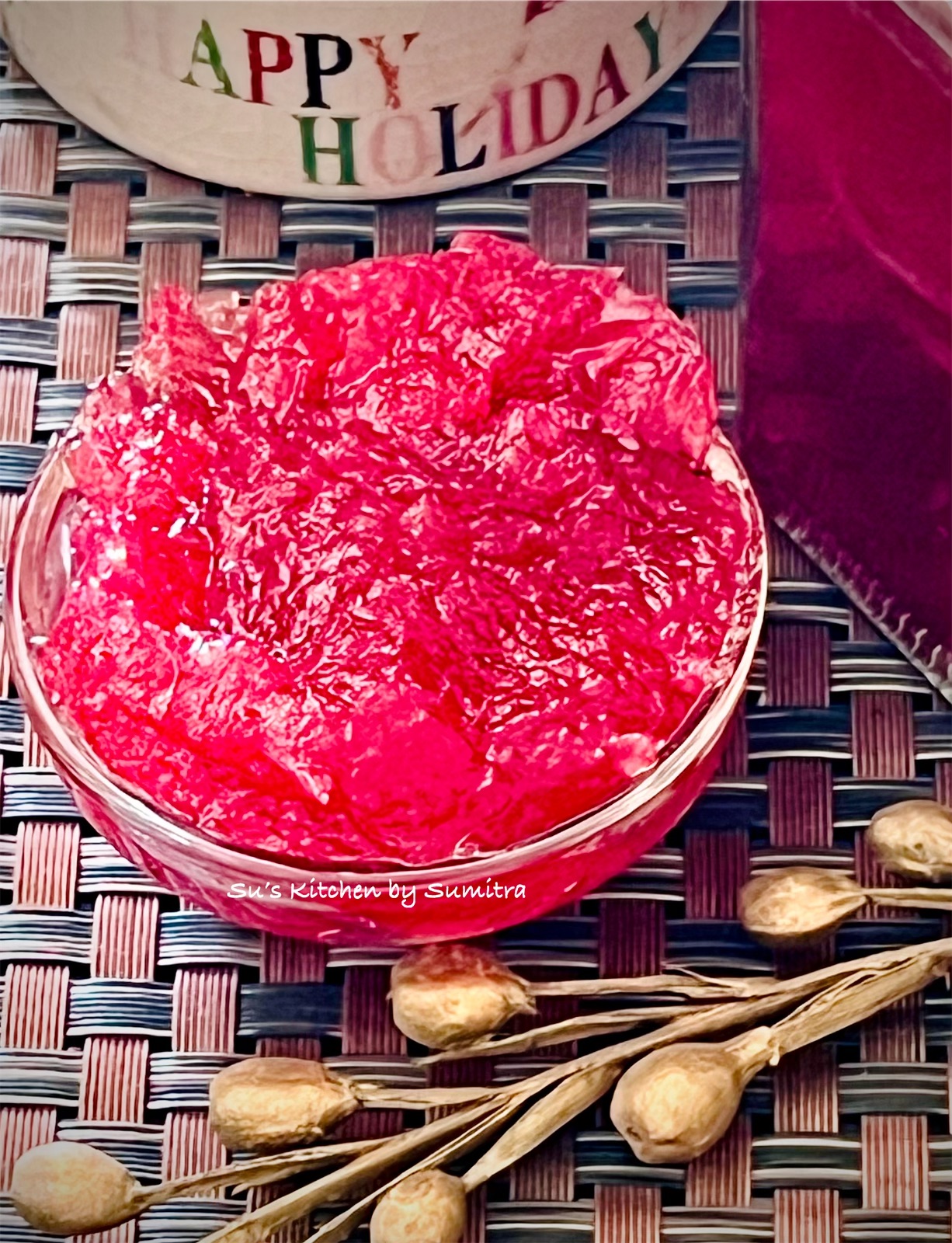
Apple - Beetroot Jam


Hola - It’s the happiest season of the year… as Christmas is just around the corner and the true magic of Christmas is  Love, Joy, Togetherness, Kindness and Care…..
Apple plays a significant role during festivals … as is considered to be an image of paradise that symbolises Joy and apples being winter fruit has made its way into so many winter holiday traditions. 
During Christmas,  stockings use to  be filled with apples and oranges, over the time now the stockings are filled with different goodies, but still today the toe of the stocking is filled with an apple or an orange. Apples are given as gifts in Eastern European culture, men have traditionally given girls a decorated apple as a romantic gesture during Yuletide (Christmas time). In China many young people have developed a tradition of giving gift wrapped apple on Christmas Eve as they say in Chinese language the word for Christmas Eve and Apple almost sounds the same meaning Peaceful / Safe night. 
Apples and Honey is a traditional dish served by Ashkenazi Jews on Rosh Hashanah - The Jewish new year. A blessing is said in Hebrew for Sweet New Year. The apple is dipped in honey and eaten. Apples have been a part of the Christmas decoration too. 
- Net source 

So let’s make Apple- Beetroot Jam this Christmas- 
Ingredients 
1 1/2 kg Apples boiled 
1 Big Beetroot boiled and grated 
Juice of 2 Oranges or juice of 1 big Lemon 
1 tbsp grated Ginger 
1 tsp Salt
750 grams of Sugar 
2 Star Anise 
1 stick of Cinnamon 


Method 
Take the boiled apples, remove the peel,  the core and seeds of the apple, blend the apple and strain the pulp through a wire mesh strainer. Take a heavy bottom pot, add the apple pulp, orange juice or lemon juice, a bottle of water, star anise, cinnamon, ginger and salt. Stir and let the pulp simmer on medium to low flame, stir occasionally. Gradually remove the jam foam that gathers on the top of the liquid. Once done add the beetroot. Continue to simmer the until the liquid has thickened. To test if the jam is ready, place a small spoonful onto a cold plate. Wait for 2 minutes or keep the plate back in the fridge for few minutes, the jam will hold its shape, incase the jam is still runny then continue to cook. Once done cool the 
Jam, while still warm, keep the jam in a clean sterilised glass bottles. This portion makes 6 bottles of jam. This jam is good to pair with bread butter, bacon and ham. The jam stay good for a year when refrigerated. 

Monday, 11 December 2023

Panch meshali Sabji r Chechki


Now this time of the season the market is flooded with winter vegetables - it’s fresh,  vibrant and adds special flavour to the dish … and we tend to buy varieties of vegetables… and then finishing them is a task specially when we have less members in the family. 

Here is a Bengali recipe that is very easy to make, with many varieties of vegetables and this absolutely pairs up with paratha, luchi, ruti for breakfast, snacks or dinner. 

Panch meshali means medley of vegetables.. and chechki means vegetables cut in small strips and stirred fried in mustard oil, tempered with nigella seeds and seasoned with just salt, turmeric powder and little sugar (optional) and I have used little ghee and coriander leaves for garnishing 

We make Alu Kumro r chechki, alur chechki, phulkopi alur chechki, badakopir alur chechki that goes will for breakfast… 

Here in this recipe I used cauliflower/ Phool kopi, Kumro / pumpkin, Carrot/ gajar and  French beans and Potatoes… 


Ingredients 

1 big bowl of vegetables -  Carrot, Potato and Pumpkin cut into small strips, small cauliflower florets and French beans cut into half.. 

2 to 4 Green Chillies slit 

Few Coriander leaves chopped 

1/2 tsp Nigella seeds 

Salt to taste 

1/2 tsp Turmeric powder 

1/4 tsp Sugar (optional) 

1/2 tsp Ghee (optional) 

1 tbsp Mustard oil 


Method 

Take a wok, add mustard oil, once the oil heats up, reduce the flame and add nigella seeds, once the seeds crackle, add all the vegetables and green chillies, salt and turmeric powder, stir and cook on low flame, sprinkle little water once in a way, cover continue cooking until the vegetables are almost tender, add sugar and continue to cook without the lid until the vegetables are cooked completely, drizzle ghee and sprinkle coriander leaves. Serve the dish with luchi, porotha or ruti. 

Thursday, 23 November 2023

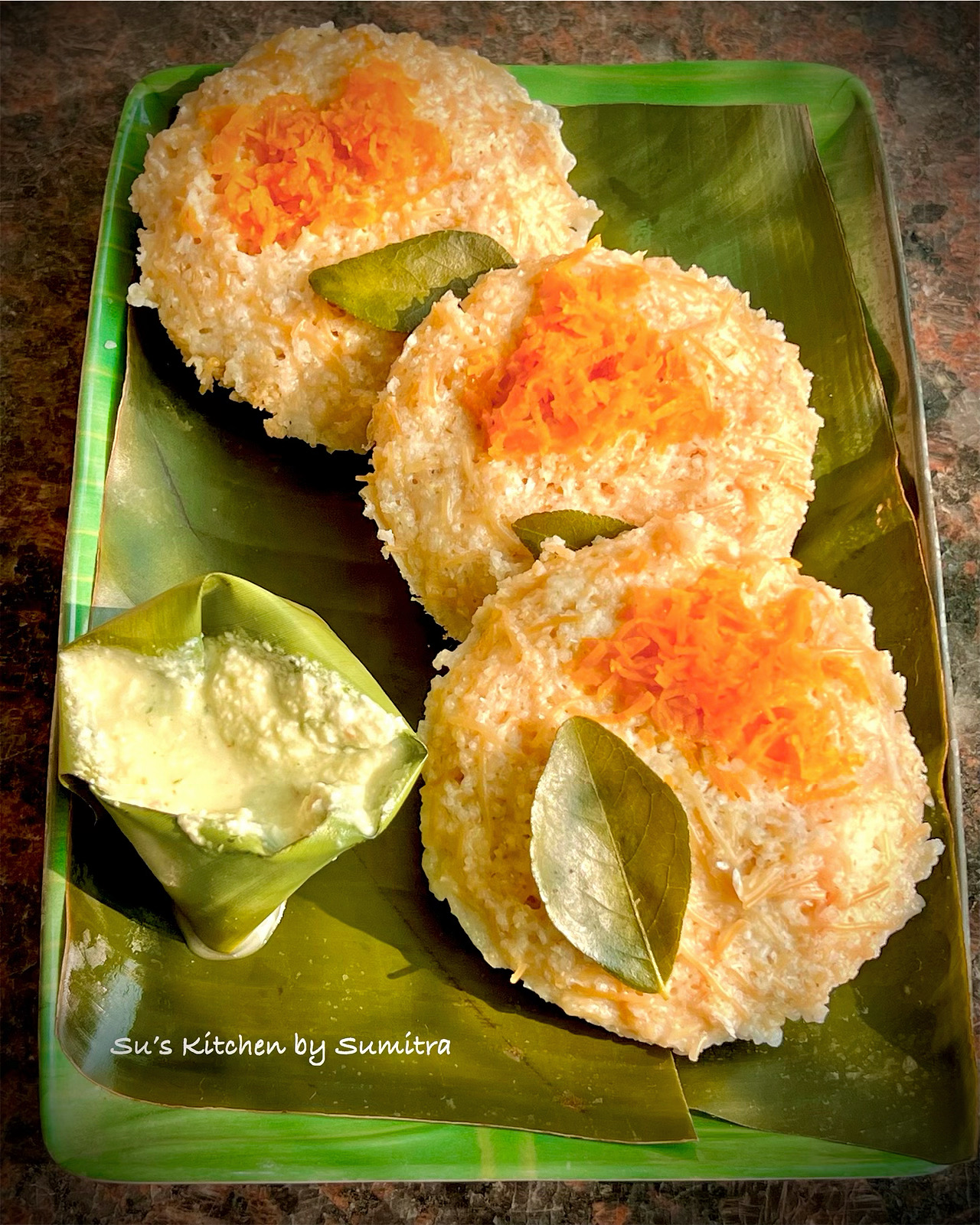
Oats - Barnyard Millet and Semolina Vermicelli Idlis with Carrot


Oats, Barnyard millet and Semolina Vermicelli with Carrots… 

Quick breakfast or snack,  easy to make and healthy too. Serve them with sambar or any chutney of your choice. Flatten rice can be also added. 

Measuring cup measurement 


Coconut Chutney 

Ingredients 

1/2 cup Grated Coconut 

2 Green Chillies 

Few Curry leaves 

4 tbsp Curd

Salt to taste 


Method 

Grind all the ingredients together, if need add little water and make fine paste. 


For the Idli

Ingredients 

1 cup Oats

1/2 cup Barnyard millet

1/2 cup Semolina Vermicelli 

1 small grated Carrot 

Few Curry leaves 

2 tbsp grated Coconut 

2 tbsp Curd 

Salt to taste 

1 tsp Eno 

1 tbsp Coconut oil


Method 

Take a grinder jar, add the oats and Barnyard millet, wash, add 2 cup water, let it soak for 10 minutes. Add salt, grated coconut and curd. Grind the ingredients in a grinder. Pour the batter in a bowl, keep it aside for 10 minutes. Add the vermicelli. Continue to soak for 15 minutes more. Take a idli steamer. Grease the mould with coconut oil. Add the eno in the batter. Gently stir the batter. Pour the batter into the idli mould. Add little grated carrot and a curry leave on the batter. Steam the idlis for 20 minutes. Check the idlis inserting a stick. If the stick comes out smooth, then the idlis are done. Once done remove the idli moulds and let it cool a bit, before scooping out the idlis from the mould. Serve the idlis with coconut chutney. 


Wednesday, 22 November 2023

Bombil Pakoda / Lote Macher Bora / Bombay Duck Fritters


Bombay Ducks / Bombil / Lote is one of my favourite fish… Today we have made crispy Bombil Pakoda. This dish can be eaten with dal rice, or eaten as a starter. 

Serve this dish with green chutney and onion slices. 


Ingredients 

10 pieces of big size Bombil, clean deboned and cut into half. 

1 tsp Ginger - Garlic paste 

1 tsp Lemon juice 

Salt to taste 

1 tsp Red Chilli powder 

1/2 tsp Turmeric powder 

1/4 tsp Carom seeds 

6 tbsp Gram flour 

4 tbsp Rice flour 

Oil to fry 


Method 

Take the Bombil pieces, and rub little salt and 1/2 tsp lemon juice on the bombil pieces. Take a bowl, sieve the gram flour and rice flour together. Add the remaining lemon juice, salt to taste, turmeric powder, red chilli powder, ginger- garlic paste, carom seeds and little water at a time to make a thick batter, beat the batter well. Heat oil in a pan, once the oil is hot, keep the oil on medium flame. Dip the bombil pieces into the batter and fry them in hot oil until golden brown in colour. Remove the bombil pakoda on a paper towel. Serve the crispy bombil pakoda with green chutney and onion slices. 

Saturday, 18 November 2023

Stewed Rice


One of our favourite dish is hot stewed rice with loads of vegetables and chicken or prawns. Easy and quick to make, the dish has to be eaten with steamed rice and has to be steaming hot.. 
Vegetables like bok choy, mushrooms, capsicum, zucchini, carrot, broccoli, baby corn etc can be added.. I have added vegetables that was available in my kitchen.. 

Ingredients 
1/2 cup cleaned medium size Prawns 
1 big bowl of cut vegetables - Few  Spinach leaves, capsicum, carrot, mushroom and broccoli and onion cut into cubes 
1 tbsp chopped Garlic 
1 tsp chopped Ginger 
2  Green Chillies slit
Few chopped Spring Onion leaves 
1 Vegetable stock cube
2 tbsp light Soya sauce 
1 tbsp Fish Sauce 
Salt to taste 
1/2 tsp Pepper powder 
1 1/2 tbsp Corn flour 
2 cups Water
2 tbsp Sesame Oil 

Method 
Take 2 cups of hot water, add the vegetable stock cube and stir well until the vegetable cube has dissolved in water, add the soya sauce, fish sauce, salt and  pepper powder in the water and keep it aside. In another small bowl mix the corn flour and water. Take a wok, add 1 tbsp oil, let the oil heat, add prawns and stir fry until the prawns changes its colour, remove the prawns and keep it aside. Now add the remaining oil, add the chopped Ginger and garlic, sauté for few seconds, add the onion and carrot, stir for few seconds, add the broccoli and spinach continue to stir for few seconds, add the mushrooms and capsicum, stir for another few minutes, add the prawns and the vegetable stock water. Cover and let the stew cook until the vegetables are half cooked, add the corn flour water and cook on high flame until the gravy becomes thick. Sprinkle spring onions and serve the stew with steamed rice. 


Thursday, 16 November 2023

Drumstick - Potatoes and Mung Dal fritters cooked in Mustard and Poppy seed paste gravy


Munger Daler Bora diye Alu ar Shosnerdata r shorshe - posto r Jhal / Drumstick - Potatoes and Mung Dal fritters cooked in Mustard and Poppy seed paste gravy. 
This dish comes under Niramish ranna / vegetarian cooking where no onion and garlic is used. 
The look of the dish may not be fancy, but this is a rustic regional dish from Bengal. These kind of dishes are still made in rural villages or in the state of Bengal, but are gradually losing its identity outside the state, as now a days many don’t cook or don’t prefer to eat … specially our next generations to come. I remember my mother use to make it often, but now we too rarely make it.. as we avoid mustard paste for health reasons.. once in a way it’s good to enjoy with hot steamed rice. This dish is eaten during lunch. 

For the Mung dal fritters 
Ingredients 
1/2 cup Mung dal washed and soaked in water
1 small piece of Ginger 
1 Green Chilli 
Salt to taste
Mustard Oil to fry 
Method 
Coarsely grind the mung dal, ginger, green chilli and salt together without adding much water as we need a thick paste. Remove and keep the paste aside for 15 minutes. Beat the paste well. Take a pan, add oil, let the oil heat, add very small quantity of the paste into the oil, with the help of a tsp, repeat the process until the pan is filled, shallow fry the fritters until golden brown in colour from both the sides. Remove and keep the fritters aside. 

For the Mustard Poppy Seed paste 
Ingredients 
2 tbsp Poppy seeds 
1 tbsp Mustard seeds
1 Green Chilli

Method 
Add all the above ingredients into a grinder and grind all the ingredients into a smooth paste adding little water at a time. 

For the Gravy 
2 Drumsticks cut into 1 1/2 inches pieces 
1 Big Size Potato cut into cubes 
1 small size Tomato cut into cubes 
2 Green Chillies slit
Few Coriander leaves chopped 
Mung Dal fritters 
Salt to taste 
1/2 tsp Turmeric powder 
1/4 tsp Nigella seeds
Mustard - Poppy seed paste 
2 tbsp Mustard oil 

Method 
Take a iron skillet, best cooked in iron skillet, add 1 1/2 tbsp oil, once the oil heats up, reduce the flame, add the Nigella seeds, let the seeds crackle, add the tomato, let the tomato sauté for a minute, add the potato cubes and the drumsticks, continue to sauté for a minute, add salt to taste and turmeric powder, stir and continue to cook for another minute, now add the mustard - poppy seed paste, stir and cook for few seconds, add 1 cup of water, on low flame, cover and let the gravy cook until the drumsticks and potato cubes are cooked, add the fritters and continue to cook, if the gravy has dried up then only add little water, the gravy shouldn’t be too watery or too dry. Once done drizzle the remaining oil and sprinkle some coriander leaves before serving .

Thursday, 9 November 2023

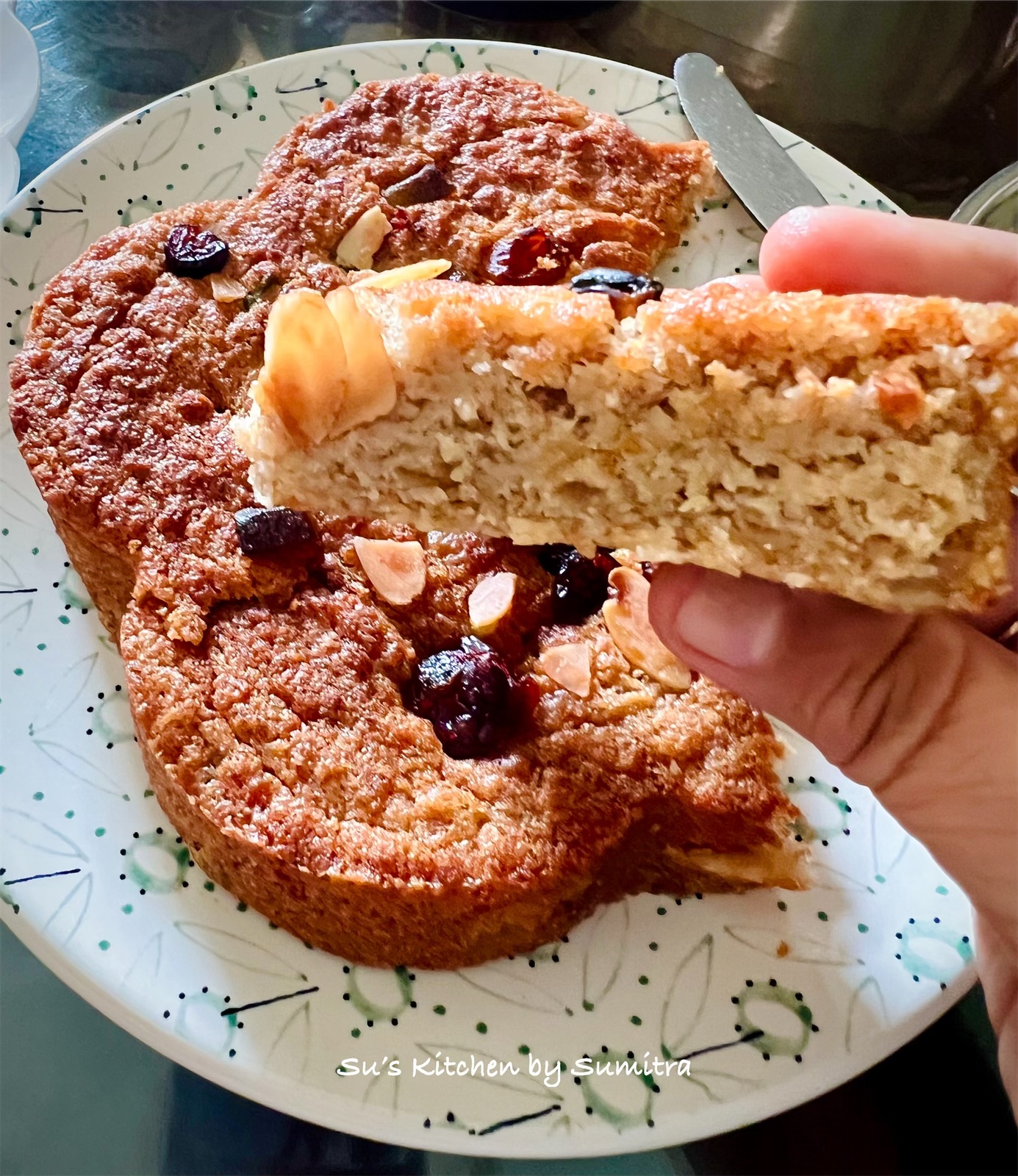
Dried Mix Fruit Cake with leftover bread served with Custard


If you have left over bread at home and don’t know what you want to make… here is a easy recipe of a Cake with leftover Bread that you can easily prepare at home… it’s delicious.. the ingredient measurement are taken in measuring cups and spoons. Please follow the proper recipe. Here I have made 2  cakes in 2 different methods. One is on the gas in a heavy bottom vessel and another cake in the oven.. 


Ingredients 
10 slices of Brown Bread 
2 cups of Toned Milk in room temperature 
100 grams of Butter
2 tbsp Curd
1/4 tsp Vanilla Essence 
3/4 cup of Caster Sugar 
3/4 cup Dried Mix Fruits chopped and chopped Nuts - Cranberries, Raisins, Apricot, Kiwi, Almond, Cashews etc. 
1/2 tsp Salt
1/2 tsp Baking Soda 
1/4 tsp Soda Bicarbonate 
1 tsp Wheat flour 

Method- 
Take a bowl, cut the bread pieces into small pieces, add 2 cups of Milk, let the milk soak into the bread. In another bowl, take butter, sugar, salt, curd and vanilla essence. Beat the ingredients together until creamy and sugar has mixed well with the ingredients. Add the soaked bread, continue to beat until all the ingredients have combined together and there are no  bread pieces seen. The batter may look curdled but it’s ok. Now keep half of the dried chopped fruits and nuts aside. Add the wheat flour into one portion of the chopped dried fruits and nuts, mix well, add this into the batter, also add the soda bicarbonate and baking powder, beat once more. The batter should be of thick dropping consistency. Don’t over beat. Now take 2 moulds, grease both the moulds with butter. So here I have taken one normal mould and one bundt ring cake mould. Pour the batter in both the moulds, up to 3/4 of the containers. In the normal Cake mould, after pouring the batter, sprinkle some chopped dried fruits and nuts. Rest of the dried fruits and nuts keep aside. 
To cook on the gas - Take a heavy bottom pot, place a ring at the bottom of the container so that the cake tin doesn’t come in direct contact with the pot. Cover the pot and on medium flame let the container heat for 2 to 3 minutes until the pot becomes hot. Remove the lid and keep the cake container over the ring, cover and let it bake for 20 minutes. After that insert a tooth pick to check. Switch off the flame and let the cake cool down. 
To make it in a oven - 
Preheat the oven at 180 degrees celsius. Bake the cake for 20 minutes, check the cake after 20 minutes by inserting a stick. Once done remove the cake from the oven and let it cool. 


To make the Custard 
Ingredients 
2 cups of Milk
2 tbsps Custard Powder 
1 1/2 tbsp Sugar
The remaining chopped dried fruits and nuts 

Method 
Take a cup, add 1/2 cup milk, add the custard powder. Mix the custard powder well with the milk. Keep the rest of the milk to boil, add sugar, let the milk simmer for a 2 minutes, add the custard powder milk and on a low flame keep stirring the custard, so that no lumps are formed. Cook the custard until the custard has thickened up and has reduced half in quantity. Switch off the flame. Let the custard cool a bit. Add the chopped dried fruits and nuts. Stir and mix well. Let the custard cool down completely. Keep the custard in the fridge to chill. 


To serve the cake - 
Before serving the ring bundt cake, pour the chilled custard into the centre cavity, garnish with dried mix fruits and nuts. 
To 

Thursday, 2 November 2023

Oats Uttapam


Oats Uttapam - A quick, tasty and instant snack / breakfast that is also very healthy….. 

its easy to make and I am sure children will love it.. Serve this with chutney of your choice. 

Here is how I make it at home …


For the Veg Masala Spread - 

Ingredients 

4 tbsp chopped Onion 

4 tbsp chopped Tomato 

1 chopped Green Chilli 

2 tbsp chopped Coriander 

Few chopped Curry leaves 

2 tbsp Grated Coconut 

1 tsp Sambar powder 

Salt to taste 

Method- 

Mix all the above ingredients together and keep it aside 


For the Batter- 

Ingredients 

3/4 cup Oats 

1/4 cup Semolina 

2 tbsp Curd 

Salt to taste 

Method 

Take a blender jar, add the above ingredients and add 1/2 cup water, mix and keep it for 10 minutes, now add little water at a time and blend all the ingredients together, the batter should be thick dropping consistency. Let the batter rest for another 15 minutes. 


To make the Uttapam- 

Ingredients 

Batter

Veg Masala spread 

Ghee 

Method 

Take a skillet, once the skillet is hot, reduce the flame to medium low, pour a big ladle spoon of batter on the skillet, spread the batter a bit, spread the veg masala spread over the batter. Drizzle little ghee. Cover the uttapam and let it cook for a minute, open the cover and check, turn the uttapam and let it cook for another minute. Serve the uttapam with Chutney of your choice.


Sunday, 29 October 2023

Caponata


Its a classic Sicilian starter or a side dish.
 

The sweet and sour dish is eaten with bruschetta,  meat or fish, rice or pasta. It’s a type of vegetarian relish, some add fish to the dish. It’s made with egg plants , bell peppers, celery, tomatoes, zucchini, onions, olives, capers etc. Apart from the vegetables white wine vinegar or red wine vinegar is added for the tanginess and honey, raisins or sugar is added to the dish for sweetness. Some time pine nuts are also added. Each house has their own variant of making Caponata. This dish is eaten when warm, room temperature or cold .. this dish can be cooked a day prior and refrigerated and eaten the next day. 

Ingredients 
3 Long Eggplant cut into cubes 
1 Yellow Zucchini cut into cubes 
1 small Red Bell Pepper cut into half and sliced 
1 Onion cut into half and sliced 
1 Celery stalk sliced 
5 to 6 crushed Garlic 
4 tbsp Green Olives sliced 
Few fresh Parsley for garnishing 
2 tbsp Capers or Pickled Green Peppercorn 
Salt to taste 
1/2 tsp Pepper corn crushed 
4 tbsp White wine vinegar or Red wine vinegar 
3 tbsp Tomato sauce 
1 tbsp Honey 
2 tbsp Olive Oil 
Method 
Sprinkle little salt and drizzle little oil on the egg plants and zucchini, grill the vegetables at 180 degrees Celsius for 15 minutes. Keep them aside. Take a pan, add the olive oil, add the onion, garlic,  bell pepper, and celery, sauté until the onions are lightly browned. Add the olives, capers or pickled pepper corn, tomato sauce, white wine or red wine vinegar, honey, salt and crushed pepper. Stir and sauté for few seconds, add the grilled egg plants and zucchini. Stir and cook for another minute. Sprinkle fresh parsley. Let the dish come to a room temperature, serve the dish with bruschetta. 

Tuesday, 10 October 2023

Chandrapuli


 Chandrapuli 

It’s a quintessential Bengali sweet dish made with Coconut and Mawa. The name of this sweet derived from the shape of the sweet “Chandra” means shape of the moon.. I remember during my childhood days in Kolkata, there use to be a sweet seller visiting my Aunty’s house to sell sweets required for offerings to God. One of my favourite sweet that is mostly offered to God mainly during Durga Puja and Laxmi Puja and during other pujas too and then for our pet puja as Prasad.. 
There are many ways of making this sweet. Wooden moulds are available in the market to make this sweets. I am using a clay mould which I have inherited from my mother. Here is one of the easy way you can make this sweet at home.  

Preparation time - 15 minutes 
Cooking  time - 30 minutes 
Number of Sweets made - 14 pieces 

Ingredients 
1 small Coconut grated (around 1 cup) 
1/2 cup Mawa 
1/2 cup  Milk or Coconut Milk 
1/4 tsp Cardamom powder 
5 tbsp  Sugar 
1/4 tsp Salt 
1 tsp Ghee for greasing 

Method 
Add the grated coconut, mawa, salt, cardamom powder and coconut milk in a grinding jar. Grind all the ingredients into a smooth paste. 
Add the paste into a non stick pan. Cook the paste on low heat. We have to keep stirring the paste. When the paste thickens, add the sugar and continue to cook. Continue to cook and stir further on low heat until the paste starts to leave the side of the pan. To check take a very small portion of the mixture, when the mixture begins to roll easily without breaking then the paste has cooked well. Remove the paste on a plate. Grease the Chandrapuli mould, with ghee. Take small portion of the mixture while it is still warm, gently press the mixture and shape the mixture with the help of the mould. Gently demould the sweet  and keep it on a greased plate.  Repeat the same process for the remaining mixture. Keep the sweet aside for 3 to 4 hours before consuming. 
We got 14 pieces as our mould was small.